Spend intelligence is procurement and pricing data drawn from real negotiated outcomes — not list prices, invoices, or crowd-sourced submissions — combined with the contextual intelligence needed to act on it: what levers work with a specific vendor, what terms comparable companies negotiated, and what strategy will get you the outcome you need.
Spend intelligence is what separates knowing you are overpaying from knowing exactly what to do about it. Pricing data tells you what something costs. Spend intelligence tells you what something costs, what comparable companies at your size and stage actually paid after negotiating, and the specific tactics that moved the deal. Most teams can get a number. Far fewer get the intelligence that actually changes what they pay.
The distinction matters more than ever. According to Tropic's 2026 Software and AI Trends Report, your top 10 legacy vendors command nearly 75% of total software spend — averaging $5.2M annually for mid-market and enterprise companies — while AI-native tool spend grew 94% year-over-year. Vendor pricing is being rewritten constantly. A benchmarking gap anywhere across that spend is expensive.
Pricing Data vs. Spend Intelligence: What Is the Difference?
Most buyers approaching a renewal have access to some form of pricing data. What they typically lack is spend intelligence. The two are not the same.
Pricing data is a number: a benchmark range, a list price, a crowd-sourced average. It tells you roughly what a tool costs in the market. It does not tell you what a buyer in your situation, with your contract profile, negotiating with this vendor in this quarter, could actually achieve.
Spend intelligence goes further across two dimensions:
- The what: Are you overpaying? By how much, at the SKU level, for your specific contract profile, compared against unbiased data drawn from real negotiated outcomes — not list prices, invoices that may already reflect overspend, or scraped pricing pages.
- The how: The exact levers that have worked with this specific vendor. What is negotiable and what is not. The tactics that move the needle and the ones that do not. The realistic outcome range you should be targeting, and the conversation structure to get there.
When both come from unbiased transaction data and human-led negotiation outcomes, a benchmark stops being a number and starts being a negotiation strategy.
Where Free and Cheap Pricing Data Falls Short
Understanding the limitations of common pricing data sources is the starting point for understanding why spend intelligence exists as a distinct category.
- Public information synthesis pulls from vendor pricing pages, analyst reports, press mentions, and public forums. The result is list price data with no signal from what companies your size actually negotiated.
- Invoice data scanning captures what companies agreed to pay, not what was achievable. No signal to what could have been negotiated. Overspend in the dataset becomes the benchmark baseline.
- Crowd-sourced free tiers are directional at best. Built to drive upgrades, not to surface the contract-level intelligence that moves the needle.
What none of these sources capture is the negotiation itself — and that is the only data point that actually matters.
These limitations manifest in four specific ways when you try to use cheap pricing data in a negotiation:
- It goes stale fast: Most enterprise SaaS vendors do not publish actual pricing, only aspirational list prices. AI-driven tiers are being restructured quarterly. A benchmark from six months ago may not reflect how a vendor is pricing today.
- It lacks context: A 200-person growth-stage company and a 1,500-person enterprise have entirely different outcomes with the same vendor. Pricing variability exists at the SKU level. Contract structure, term length, and competitive alternatives all shape what is achievable — and free tools see none of that.
- It may be biased: Some providers earn commissions from the suppliers you are negotiating against. That is a direct conflict of interest, and benchmarks from those sources are structurally compromised.
- It is not actionable: Free data gives you a number, not a strategy. It does not tell you whether that price is fair for your situation, which levers work with this vendor, or how to structure the conversation to get the outcome you need.
The playing field is already uneven. Software vendors negotiate thousands of contracts per year and know their discount floors by company size, quarter, and competitive situation. Your team negotiates those same contracts once per renewal cycle. The only way to close that gap is with data built from the same environment: actual human-led negotiations, outcomes, and vendor behavior under pressure.
What Spend Intelligence Actually Provides
Spend intelligence is multi-dimensional. Single data points miss this entirely. Strong spend intelligence has four characteristics:
- Depth: Intelligence goes beyond a benchmark range. It includes SKU-level pricing, discount ranges actually achieved with this vendor, and price variability by percentile — what the ceiling and floor actually look like for buyers in your position.
- Context: Intelligence tells you what companies your size and stage are paying, what contract structures and competitive dynamics shaped those outcomes, and whether your terms are off — not just your price. If comparable companies negotiated better uplift caps, shorter auto-renewal windows, or more favorable payment terms, you will see that. And because vendor pricing strategies shift constantly, that context needs to be live and always current.
- Actionability: Intelligence gives you a game plan: exactly what is negotiable with a specific vendor, where your current contract terms leave you exposed, and what to prioritize in the conversation. It flags problems and surfaces the tactics to solve them, drawn from what other teams and procurement experts have done in real negotiations.
- Delivery: The best data in the world does not help if you have to go hunt for it. Spend intelligence surfaces proactively in your workflow — when a renewal is approaching, when a proposal lands, when you are already making a decision — not in a separate dashboard you have to remember to check.
How Spend Intelligence Works in Practice: Purchase Prep
Tropic's Purchase Prep Assistant is a direct example of spend intelligence operating as a coordinated system rather than a static report.
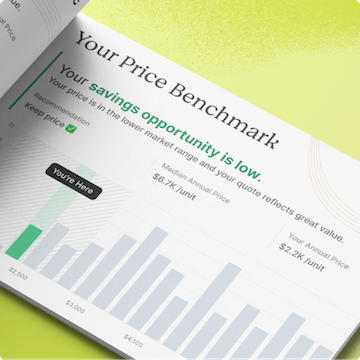
The average company manages over 100 software contracts. No team has the bandwidth to properly research and negotiate all of them with equal depth. Purchase Prep automatically scans contracts, flags the renewals worth negotiating based on savings opportunity against Tropic's $20B+ dataset, and surfaces benchmarks, usage analysis, and vendor-specific negotiation playbooks directly — so teams go from research to action in seconds, not hours.
For a given supplier, you see a savings opportunity estimate, your pricing percentile against Tropic's proprietary dataset, and the exact tactics that have worked with that vendor from human-led negotiations. Companies that prepare six months before renewal see 39% higher savings than teams that scramble at the last minute. Spend intelligence is how that preparation happens systematically, across every contract.
As Nick Troia, Senior Financial Analyst at CompanyCam, described it: "Purchase Prep can save our team hours on renewal preparation by surfacing recommendations and vendor intelligence right when we need it. The insights given by combining Pulse Surveys, our contract information, and Supplier Intelligence helps to level the playing field when negotiation time comes around."
What Makes Spend Intelligence Trustworthy
Not all spend intelligence is equally reliable. The three questions worth asking before trusting any benchmark in a negotiation:
- Where did this number actually come from?
- What is the sample size behind it?
- How recent is it?
Tropic's Spend Intelligence starts where cheap data sources cannot go. Verticalized commercial executives negotiate live deals every day — and every call, email, and presentation from those engagements is analyzed by AI to generate $20B+ in spend intelligence across 30,000 suppliers. Because the data comes from active, specialized negotiations across multiple channels rather than crowdsourced contracts or invoice data, it is more accurate, more current, and more actionable.
The data is unbiased by design. Tropic accepts no kickbacks or commissions from suppliers — every benchmark exists to serve the buyer. Price benchmarks are updated daily, negotiation playbooks are updated quarterly, and only data from the past 18 months is used to derive price benchmarks, so what you see reflects current market conditions rather than historical baselines. Every benchmark and negotiation playbook is backed by category experts who have negotiated with specific vendors and their alternatives more than 100 times.
In Q1 2026, Tropic surpassed $20 billion in spend under management, delivered more than $15 million in customer savings, and returned 44,808 hours to finance and procurement teams. Tropic also delivered nearly 15,000 insights to customers in Q1 — a 67% increase over Q4 2025 — as teams used the platform to surface savings opportunities earlier in the renewal cycle.
Frequently Asked Questions
What is spend intelligence?
Spend intelligence is procurement and pricing data drawn from real negotiated outcomes, combined with the contextual intelligence needed to act on it: what levers work with a specific vendor, what terms comparable companies negotiated, and what strategy will get you the outcome you need. It differs from basic pricing data in depth, context, actionability, and how it is delivered.
What is the difference between pricing data and spend intelligence?
Pricing data tells you what something costs — a benchmark range, a list price, a crowd-sourced average. Spend intelligence tells you what comparable companies at your size and stage actually paid after negotiating, what is achievable for your specific contract profile, and the exact tactics that move the deal with a specific vendor. Pricing data is a starting point. Spend intelligence is an action plan.
Why are free software benchmarks not enough for negotiations?
Free benchmarks fall short in four ways: they go stale quickly as vendor pricing shifts quarterly, they lack context about company size and contract structure, some are biased because the provider earns commissions from the vendors you are negotiating against, and they are not actionable — they give you a number but not a strategy. The only data that closes the information gap with a vendor is data built from actual human-led negotiations.
What should I look for in a spend intelligence platform?
Look for four things: SKU-level pricing depth beyond simple benchmark ranges, context that accounts for your company size and contract profile, actionable negotiation tactics drawn from real deals rather than generic advice, and proactive delivery that surfaces insights in your workflow when you need them. Also confirm the provider accepts no supplier commissions — bias in the data directly undermines the value of the benchmark. Most importantly, understand where the data comes from. Intelligence built from active, human-led negotiations across multiple channels is materially more accurate and current than data scraped from invoices, pricing pages, or crowd-sourced submissions.
How does spend intelligence help with software renewals?
Spend intelligence identifies which renewals are worth negotiating based on savings opportunity, surfaces what comparable companies paid for the same tool at the SKU level, provides vendor-specific negotiation playbooks drawn from real deals, and flags where your current contract terms leave you exposed beyond just price. Teams using spend intelligence 90 or more days before renewal consistently achieve significantly better outcomes than teams that engage at the last minute.
How often should spend intelligence data be updated?
Vendor pricing behavior changes quarter to quarter — particularly for AI-native tools and legacy vendors restructuring pricing around AI features. Spend intelligence should be updated continuously, not annually. Tropic updates price benchmarks daily as new data enters the platform, updates negotiation playbooks quarterly, and surfaces only data from the past 18 months to ensure benchmarks reflect current market conditions rather than historical baselines.
What is the difference between spend intelligence and spend analytics?
Spend analytics focuses on visibility into what you have already spent — categorizing historical spend, identifying waste, and reporting on trends. Spend intelligence is forward-looking: it tells you what you should pay, how to get there, and which contracts to prioritize. Analytics answers "what happened." Intelligence answers "what to do next."
Related resources: