.avif)
What Is the Difference Between Procurement Software and Spend Management Software?
If you have been searching for tools to help your finance or operations team control software costs, you have probably run into both terms. Vendors use them interchangeably. Analysts define them differently. Buyers end up confused about what they actually need.
The short answer: they started as distinct categories but are converging fast. The most important differentiator today is neither category label. It is data.
TL;DR
- Procurement software governs how you buy: intake, approvals, contracts, vendor management.
- Spend management software focuses on what you have bought: visibility, renewals, usage, benchmarks.
- The two categories are converging. Most modern platforms do both.
- The real differentiator is proprietary pricing data and AI, which tell you what you should be paying, not just what you are paying.
- Tropic operates at the intersection: $18B+ in spend under management, $85M saved for customers in 2025.
What is procurement software?
Procurement software manages the end-to-end process of acquiring goods and services, from the moment someone requests a purchase through to contract execution and vendor management. It is about controlling how money leaves the organization.
Core capabilities typically include intake and approval workflows, contract storage and management, vendor onboarding, policy enforcement, and purchase order generation. The focus is process: making sure the right people approve the right purchases under the right terms.
Procurement software matters most when companies scale past the point where informal buying works. When 50 people are purchasing SaaS tools, someone approving in Slack is fine. When hundreds of people are doing it across many departments, you need structure.
What is spend management software?
Spend management software focuses on visibility and optimization of what your company is already spending. It came out of the SaaS explosion, when companies started accumulating hundreds of subscriptions across dozens of departments with no central view of what they owned, what they were paying, or when things were renewing.
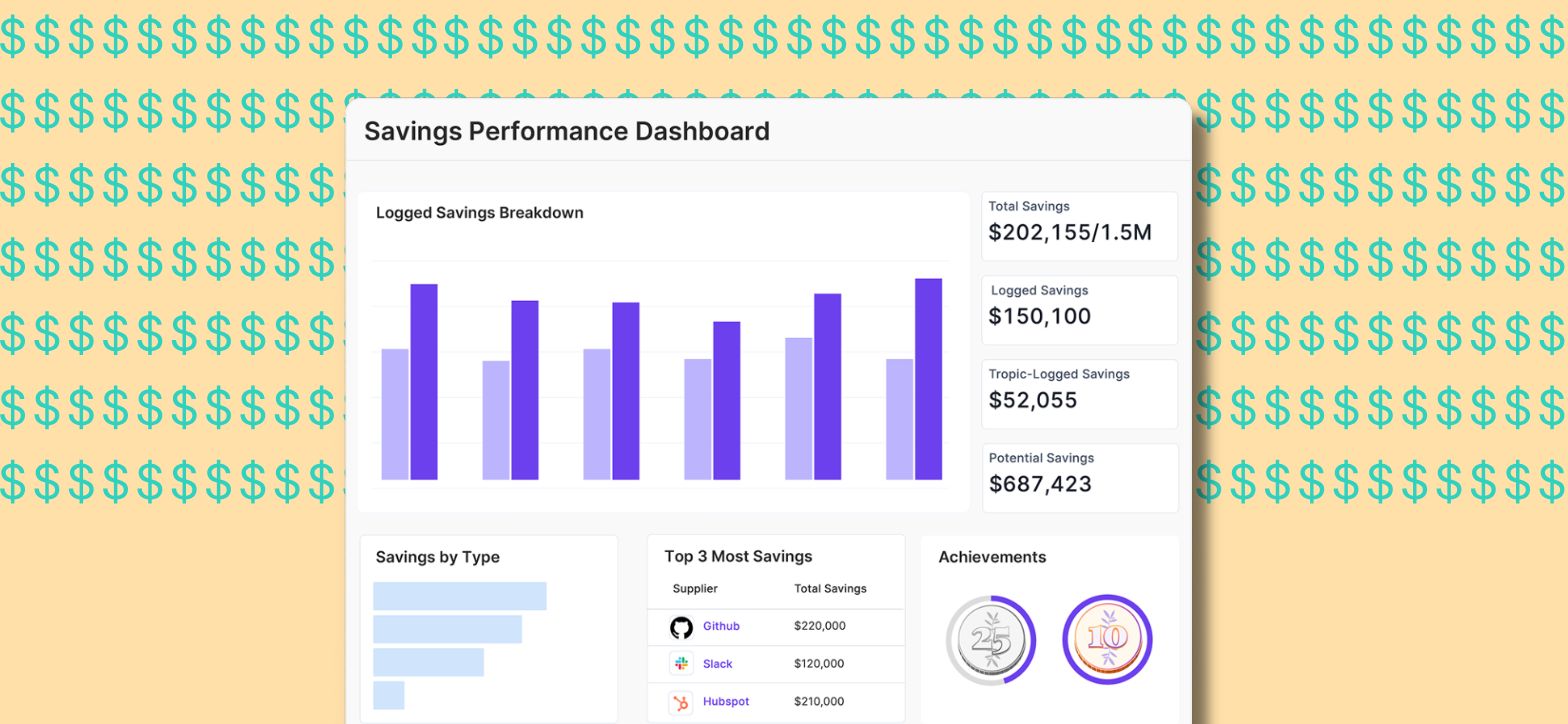
Core capabilities typically include real-time spend dashboards, automatic subscription discovery, renewal tracking and alerts, duplicate and shadow IT detection, usage monitoring, and pricing benchmarks. The focus is insight: see everything, eliminate waste, negotiate smarter.
Spend management software matters most when a finance team inherits a sprawling SaaS stack and needs to understand it before they can optimize it.
What are the key differences between procurement software and spend management software?
The clearest way to think about it: procurement software is forward-looking (how do we buy things going forward) and spend management software is backward and real-time looking (what are we already spending and where is the waste).
Procurement software is stronger at:
Structured intake and approval workflows. Contract negotiation and storage. Vendor onboarding and compliance. Policy enforcement. Purchase order generation.
Spend management software is stronger at:
Automatic discovery of all subscriptions including shadow IT. Renewal calendar and alerting. License utilization tracking. Spend benchmarking against peers. Identifying duplicate tools.
In practice, a company that only buys procurement software often still lacks visibility into what they own. A company that only buys spend management software often still lacks process control over new purchases. That gap is why the categories are converging.
Why are procurement software and spend management software converging?
The problems are inseparable. You cannot negotiate a better renewal without knowing what you are spending. You cannot manage vendor relationships at scale without a process for how new tools get approved. Visibility without action is just a dashboard. Process without data is just bureaucracy.
Software spending jumped 10% in 2024, driven largely by AI feature pricing from vendors who know most buyers lack leverage at renewal. The companies managing costs effectively were not the ones with better processes or better dashboards alone. They were the ones with better data.
Modern platforms are building toward a unified model that handles both procurement workflow and spend visibility, and adding a third layer neither category originally had: intelligence. Proprietary pricing benchmarks and AI recommendations that tell you not just what you are spending, but what you should be spending and exactly how to close the gap.
How do data and AI change what procurement and spend management software can do?
Whether a platform calls itself procurement software or spend management software, the differentiating question is: does it have the data and AI to help you act on what it knows?
Price benchmarking is the clearest example. Knowing you pay $40 per seat for a tool is useful. Knowing that companies your size typically pay $28-32 per seat, that your vendor gave a 22% discount to a similar company last quarter, and that your renewal is 60 days away is leverage. That kind of intelligence requires scale that no single company can build independently.
AI is also changing the execution side. Rather than finance teams manually tracking renewals in spreadsheets, modern platforms surface them automatically, flag which ones are worth renegotiating, and in some cases handle outreach and negotiation directly. The shift is from software that helps you manage procurement to software that increasingly does procurement work on your behalf.
Where does Tropic fit in the procurement and spend management software landscape?
Tropic was built at the intersection of both categories, with the data layer as a first-class priority from day one. The platform combines procurement workflow (intake, approvals, contract management) with spend visibility (subscription tracking, shadow IT detection, renewal alerts) and adds a proprietary intelligence layer built on more than $18 billion in software spend under management.
That spend data powers more than 100,000 price benchmarks delivered to customers in 2025 alone, and is the foundation for AI agents that identify savings opportunities and surface negotiation tactics based on what has actually worked in similar deals. In 2025, Tropic customers saved $85 million at an average savings rate of approximately 15.5% across renewals, new purchases, and vendor negotiations.
The result is a platform that does not force you to choose between process and visibility. It handles both, and uses AI and proprietary data to make both more effective.
Do you need both procurement software and spend management software?
For most companies, a modern platform that covers both is more practical than buying two separate tools. The categories have converged enough that the best platforms handle intake, approvals, contract management, spend visibility, renewal tracking, and benchmarking in a single system.
If you are evaluating options, the most important question is not whether the platform calls itself procurement software or spend management software. It is: what proprietary data does it have, and how does it use AI to turn that data into savings?