What Is Spend Management Software?
Spend management software gives companies visibility and control over what they are spending, specifically on software, SaaS subscriptions, and vendor contracts. It tells you what you own, what you are paying, whether you are overpaying, and when things are renewing.
If your finance team is tracking renewals in a spreadsheet, discovering software purchases after the fact, or heading into vendor negotiations without any benchmark data, this guide covers what spend management software does, who it is for, and what to look for.
TL;DR
- Spend management software gives companies visibility into all software spend, including shadow IT.
- Core capabilities: subscription discovery, renewal tracking, usage monitoring, cost benchmarking, and spend analytics.
- The average company wastes around 30% of its SaaS spend on unused licenses, duplicate tools, and missed negotiation opportunities.
- Modern spend management software adds AI and proprietary data to move from visibility to action.
- Tropic customers saved $85M in 2025 using spend intelligence built on $18B+ in managed spend.
What does spend management software do?
Spend management software solves a problem that became acute as SaaS proliferated: companies accumulating hundreds of software subscriptions across dozens of departments, with no central view of what they owned, what they were paying, or what was coming up for renewal.
At its core, spend management software does three things: it discovers and consolidates all of your software spend into one place, it gives you ongoing visibility into usage and costs, and it helps you identify where you are overpaying and what to do about it.
Without spend management software, finance teams are reactive. They find out about software purchases when they hit the card. They miss renewal windows and auto-renew at list price. They have no idea what different departments are using or whether half of it is redundant.
What are the core features of spend management software?
Automatic spend discovery
Spend management software connects to your financial systems, SSO, and card data to automatically surface every subscription and vendor relationship, including shadow IT that procurement never approved.
Renewal calendar and alerts
A central view of every contract renewal date, with proactive alerts so your team has enough lead time to evaluate, renegotiate, or cancel before auto-renewal kicks in.
Usage and license tracking
Visibility into whether licenses are actually being used. Most companies are paying for more seats than they need because headcount has changed since the contract was signed.
Price benchmarking
What are comparable companies paying for the same tools? Benchmarking data turns a gut-feel negotiation into a data-backed one.
Duplicate and shadow IT detection
Automatic flagging of tools with overlapping functionality and purchases that happened outside the procurement process.
Spend analytics and reporting
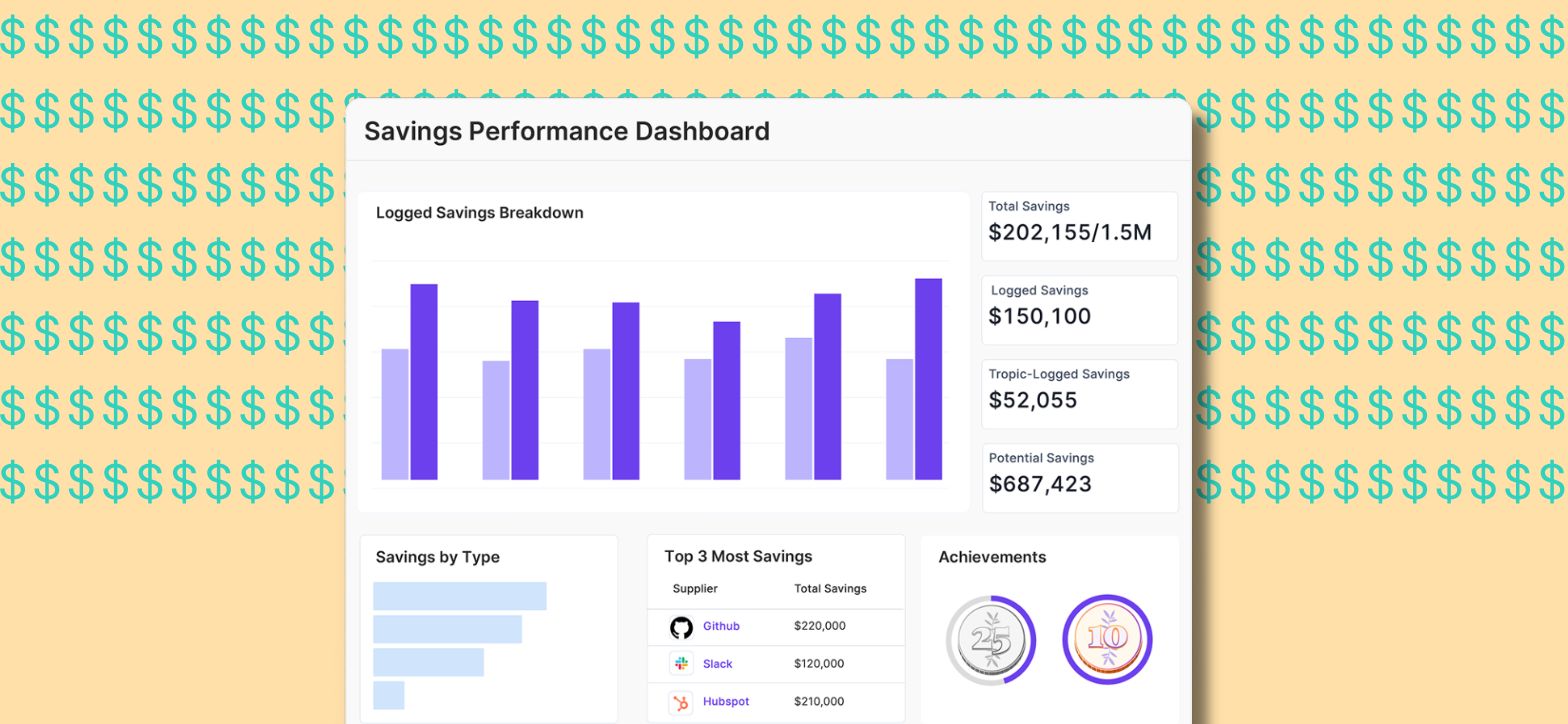
Dashboards that show spend by vendor, category, department, and time period so finance has the data to make budget decisions and track optimization over time.
Who needs spend management software?
Any company spending meaningfully on SaaS without a complete, current view of what they own. The clearest signals: you are regularly surprised by renewal charges, you have discovered duplicate subscriptions for the same tool, you are not sure how many seats you actually need when a renewal comes up, or you are walking into vendor negotiations without any data on what you should be paying.
How is spend management software different from procurement software?
Spend management software focuses on what you have already bought: visibility, optimization, renewal management, and benchmarking. Procurement software focuses on how you buy going forward: intake workflows, approvals, contract management, and policy enforcement.
The two categories have converged significantly. Most modern platforms do both. But if you are evaluating tools, the question is: do you have a visibility problem (no idea what you are spending) or a process problem (no structure around how things get purchased)? Spend management software solves the former.
For a full comparison, see our guide: What is the difference between procurement software and spend management software?
What is the difference between spend management and expense management?
Expense management handles employee-incurred costs: travel, meals, office supplies. Individual transactions that need to be submitted, approved, and reimbursed. The focus is compliance and reimbursement.
Spend management focuses on company-level software and vendor spend: SaaS subscriptions, contracts, and recurring vendor relationships. The focus is optimization and cost reduction. Expense management is mostly an employee workflow tool. Spend management is a strategic finance tool.
How does AI improve spend management software?
Traditional spend management software gives you a dashboard. AI-powered spend management software tells you what to do with it.
The most valuable AI applications: proactive identification of which upcoming renewals are worth renegotiating, real-time price benchmarks based on what comparable companies actually pay for the same tools, automatic flagging of unused licenses and duplicate subscriptions, and negotiation playbooks trained on thousands of real deals.
The underlying requirement is data. A platform with access to $18 billion in real software transactions will surface very different insights than one that is only analyzing your own spending history. Scale of data is the single biggest differentiator between spend management platforms today.
How does Tropic approach spend management software?
Tropic combines spend management (automatic discovery, renewal tracking, usage visibility, price benchmarking, and spend analytics) with a procurement workflow layer and an intelligence foundation built on more than $18 billion in software spend under management.
That data foundation is what separates Tropic from spend management tools that only give you visibility into your own data. Tropic's AI agents are trained on $18B+ in real transactions across 500+ customers, powering more than 100,000 automated price benchmarks delivered in 2025 and negotiation playbooks based on what has actually worked in comparable deals.
In 2025, Tropic customers saved $85 million at an average savings rate of 15.5% across renewals, new purchases, and vendor negotiations. Software spending increased 10% in 2024 industrywide. Tropic customers beat that trend.
What should you look for in a spend management platform?
Breadth of spend discovery
Can it find everything, including shadow IT and purchases that bypassed procurement? Limited discovery means limited visibility.
Proprietary benchmark data
Does the platform have real transaction data from comparable companies, or is it just benchmarking you against yourself? This is the most important differentiator.
Renewal management depth
Does it surface renewals proactively with enough lead time to act? 30-day alerts are not enough. You need 60-90 days to negotiate effectively.
AI that moves from insight to action
The best platforms do not just show you what you are spending. They tell you which renewals to prioritize, what to ask for, and how to get it.
Integration with your financial stack
Your ERP, accounting system, and card data. Without these integrations, the discovery is incomplete.