
Here we go again…another budgeting season, with the same anxiety-producing questions about AI spend, credible forecasts, ROI, and upcoming renewals. Your 2027 tech plan shouldn’t live in a spreadsheet.
Finance and procurement teams are expected to look across the tech stack and determine where to invest, where to reduce spend, and what deserves attention first. But software rationalization still requires too much detective work. AI usage lives across supplier dashboards, product overlap is buried inside contract line items, and renewal risk, stakeholder sentiment, and savings opportunities sit in different reports and systems.
Bringing the data together is only the first step. The real value comes from turning it into insights and recommendations that help teams prioritize resources, guide technology decisions, and plan for the best possible outcomes.
That’s the gap Tropic’s latest releases are designed to close.
Procurement Software Has Focused On Execution – Planning Is The Missing Piece
Most procurement technology was designed to help teams manage requests, route approvals, review proposals, and track contracts. Those workflows matter, but they usually begin after someone has already decided that a purchase or renewal needs attention.
The harder questions come earlier:
- Which renewals are worth spending time on?
- Where are we exposed to an AI overage?
- Are we buying the same capabilities from multiple suppliers?
- Which opportunities should we take to the CFO or a business owner?
Tropic already helps teams execute technology purchases and renewals with price benchmarks, negotiation intelligence, and expert support. With this release, we’re bringing that same level of intelligence into the planning process so teams can make better decisions before budgets are finalized and negotiations begin.
AI Consumption Management: See Where AI Spend Is Headed Before The Invoice Arrives
AI sprawl has made technology budgets harder to predict. Unlike traditional seat-based software, AI consumption can change quickly as teams launch new products, adopt new models, or move workloads between suppliers. A commitment that looked reasonable six months ago may now be heading toward a costly overage, or leaving a meaningful amount of prepaid spend unused.
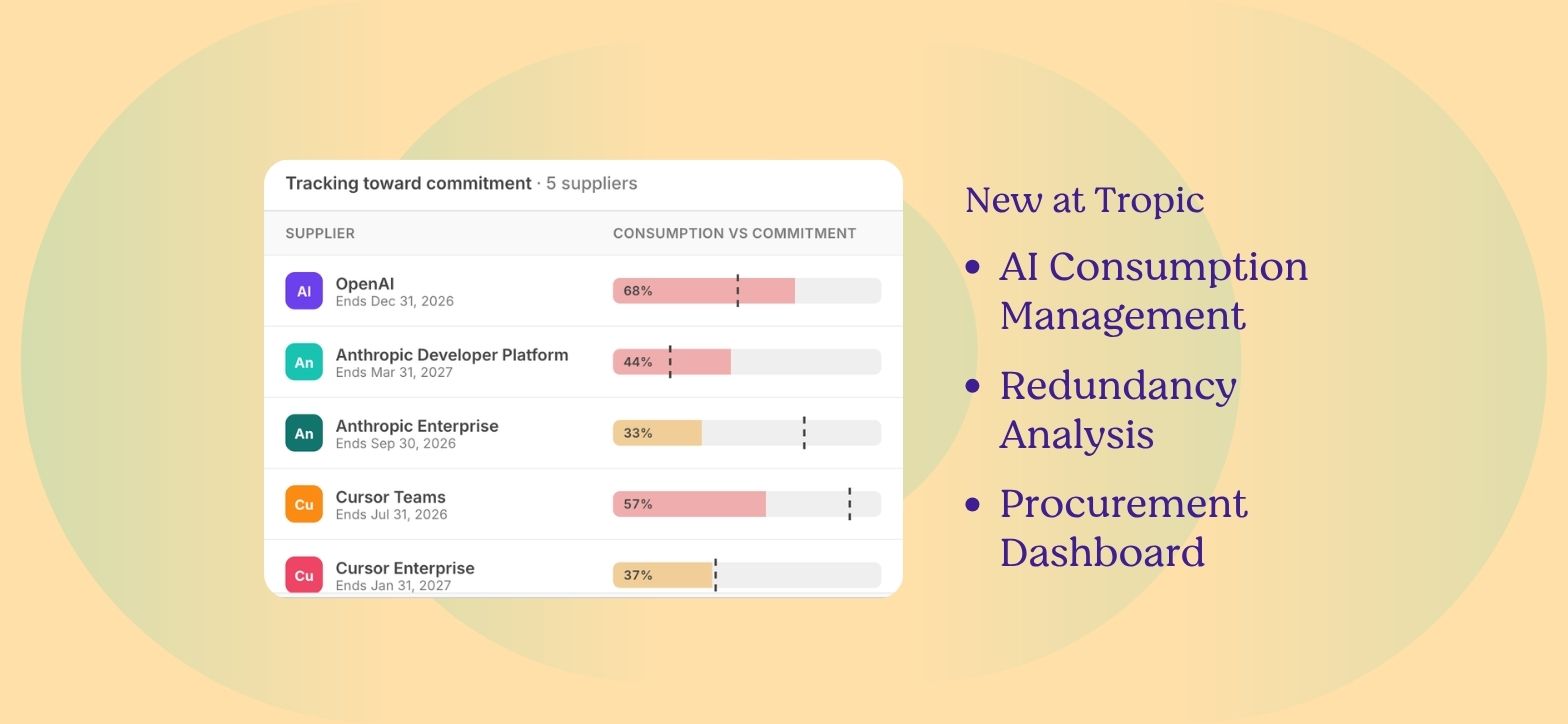
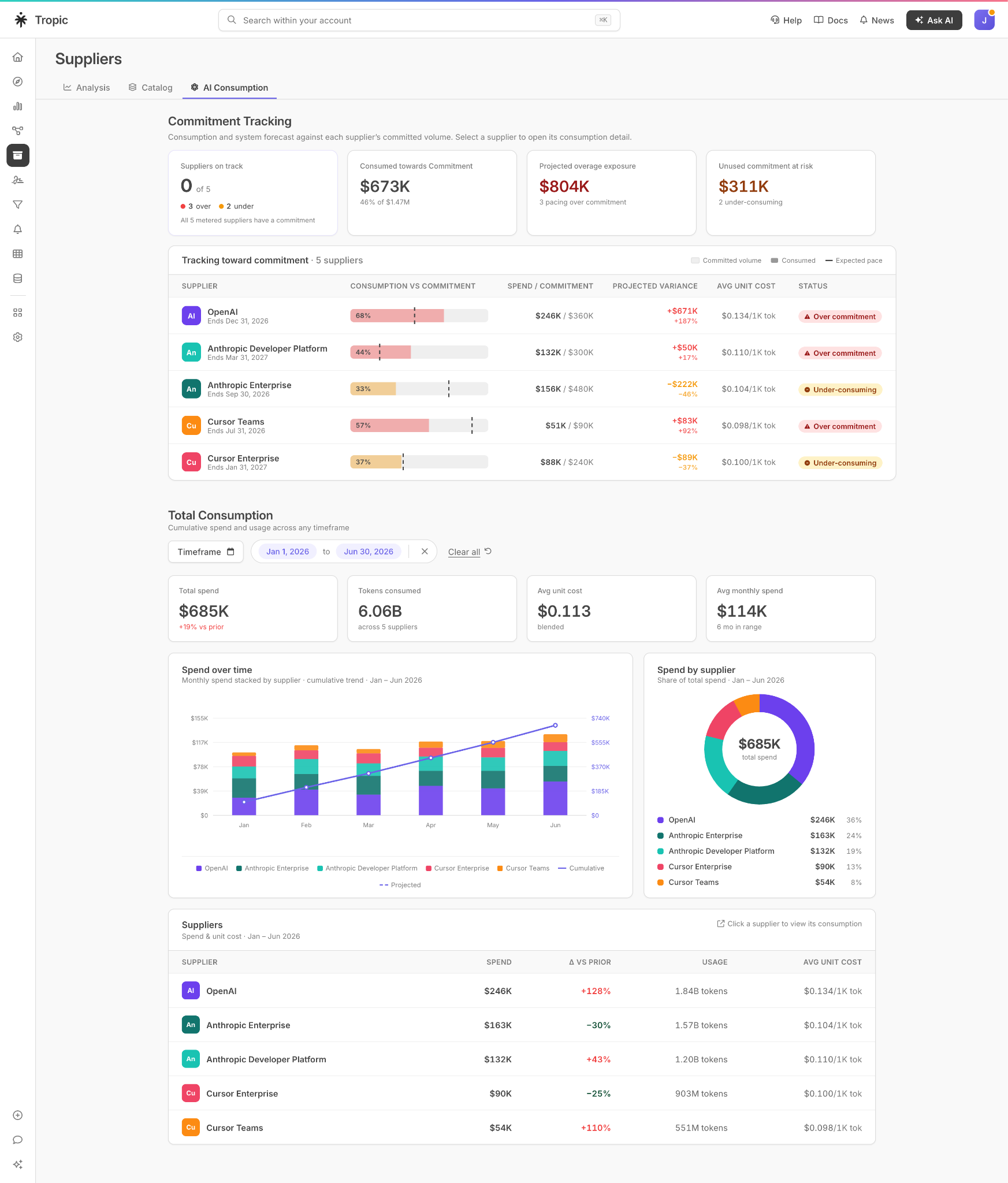
AI Consumption Management brings that fragmented usage data into Tropic, where procurement and finance teams can compare what they committed to with what they are actually consuming.
By connecting OpenAI, Anthropic, and Cursor, teams can:
- Track committed versus consumed spend across suppliers
- Forecast potential overages and unused commitments
- Understand what is driving usage by model, user, API key, and token type
- Receive alerts when consumption begins moving off pace
- Prepare for renewals with real usage data rather than estimates
Instead of learning about a problem when the invoice arrives, teams can see where spend is headed and decide whether to adjust usage, revisit a commitment, or prepare for a different agreement at renewal.
Software Redundancy Analysis: Find Overlap Hidden Inside Your Contracts
Most companies already suspect that parts of their tech stack overlap and have some software redundancy. The problem is that knowing two suppliers compete does not tell you whether the specific products you purchased are truly redundant.
For example: Salesforce and HubSpot may overlap broadly, but that does not mean every product, package, or capability included in those agreements does the same job. Without that detail, consolidation decisions rely on tribal knowledge, manual research, and assumptions that may not hold up once business owners get involved.
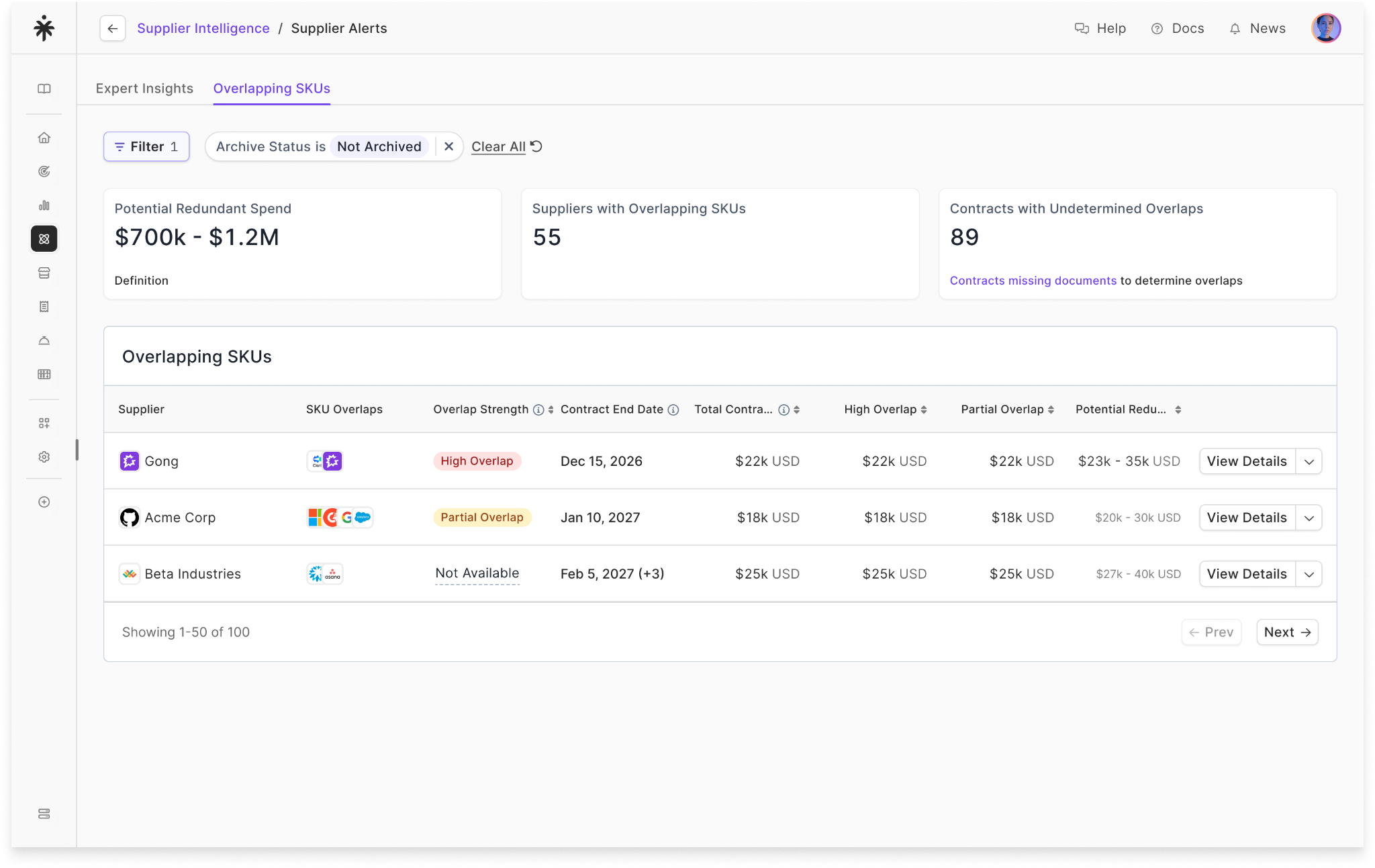
Redundancy Analysis looks inside active contracts to identify the products and SKUs a company has actually purchased. Tropic then compares those purchases across suppliers, explains where capabilities overlap, highlights meaningful differences, and estimates how much contract value may be redundant.
Customers can use that analysis to:
- Separate true software redundancy from tools that are complementary
- Quantify the spend associated with strong and partial overlap
- Explore different consolidation and savings scenarios
- Bring more specific evidence into renewal negotiations
- Share the findings with finance leaders and business owners
The goal is not to tell a customer which supplier to keep. It’s to replace a vague suspicion about overlapping tools with enough detail so they can make a thoughtful decision.
Personalized Procurement Dashboard: Bring The Full Picture Into One Place
Seeing an AI overage or a consolidation opportunity is useful, but teams still need to understand how that insight fits alongside everything else competing for their attention.
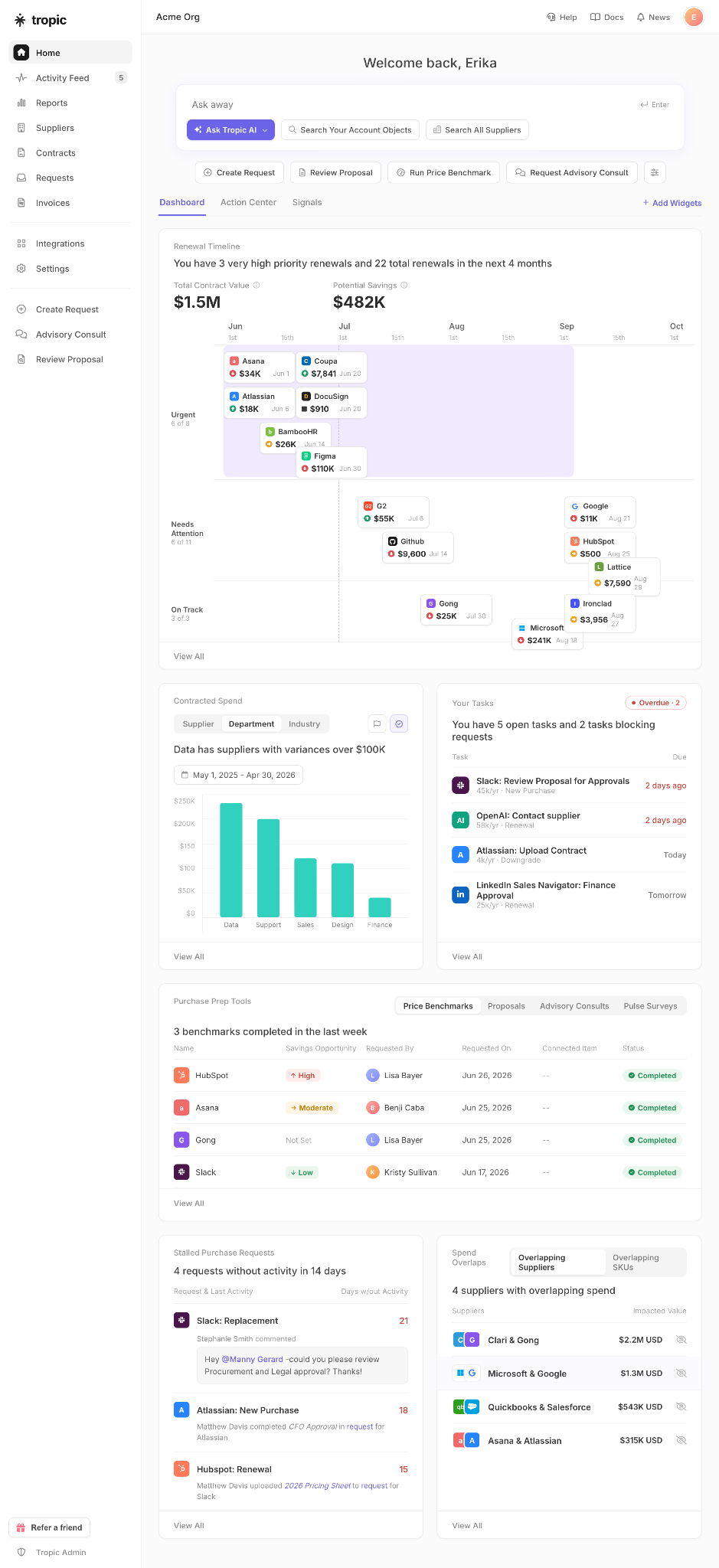
Tropic’s redesigned homepage connects the planning story by organizing work around three straightforward questions.
Dashboard: What is happening?
Each user can build a personalized view of the renewals, tasks, requests, spend, and supplier intelligence they care about. Prebuilt widgets and Saved Views turn recurring reports into an always-available workspace rather than another spreadsheet that has to be rebuilt.
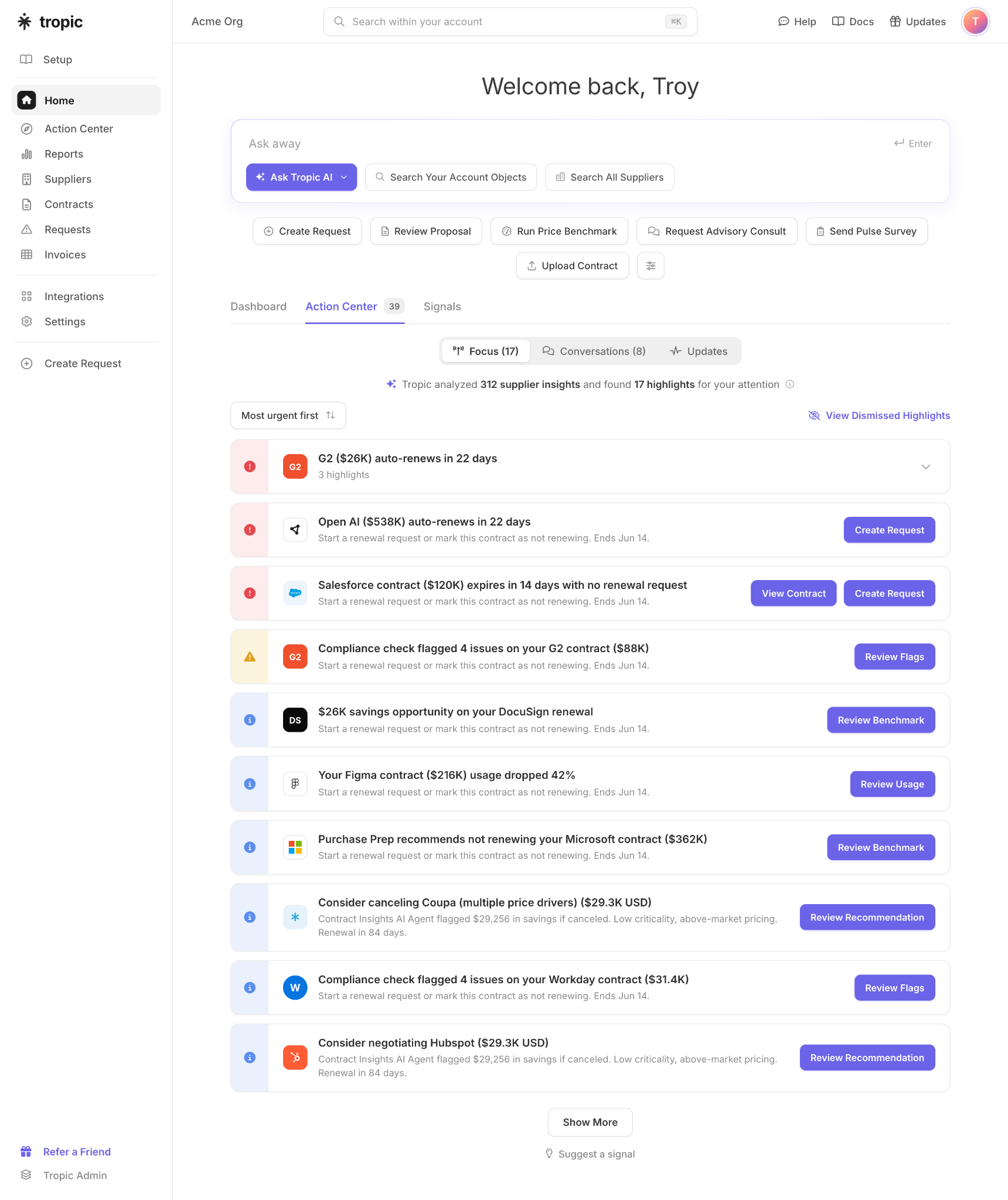
Action Center: What needs my attention now?
Tropic Focus prioritizes renewals, spend changes, shadow IT, stalled requests, tasks, and new insights based on urgency and impact. Conversations keeps mentions and reactions together, while Updates shows what has changed across the contracts and requests a user follows.
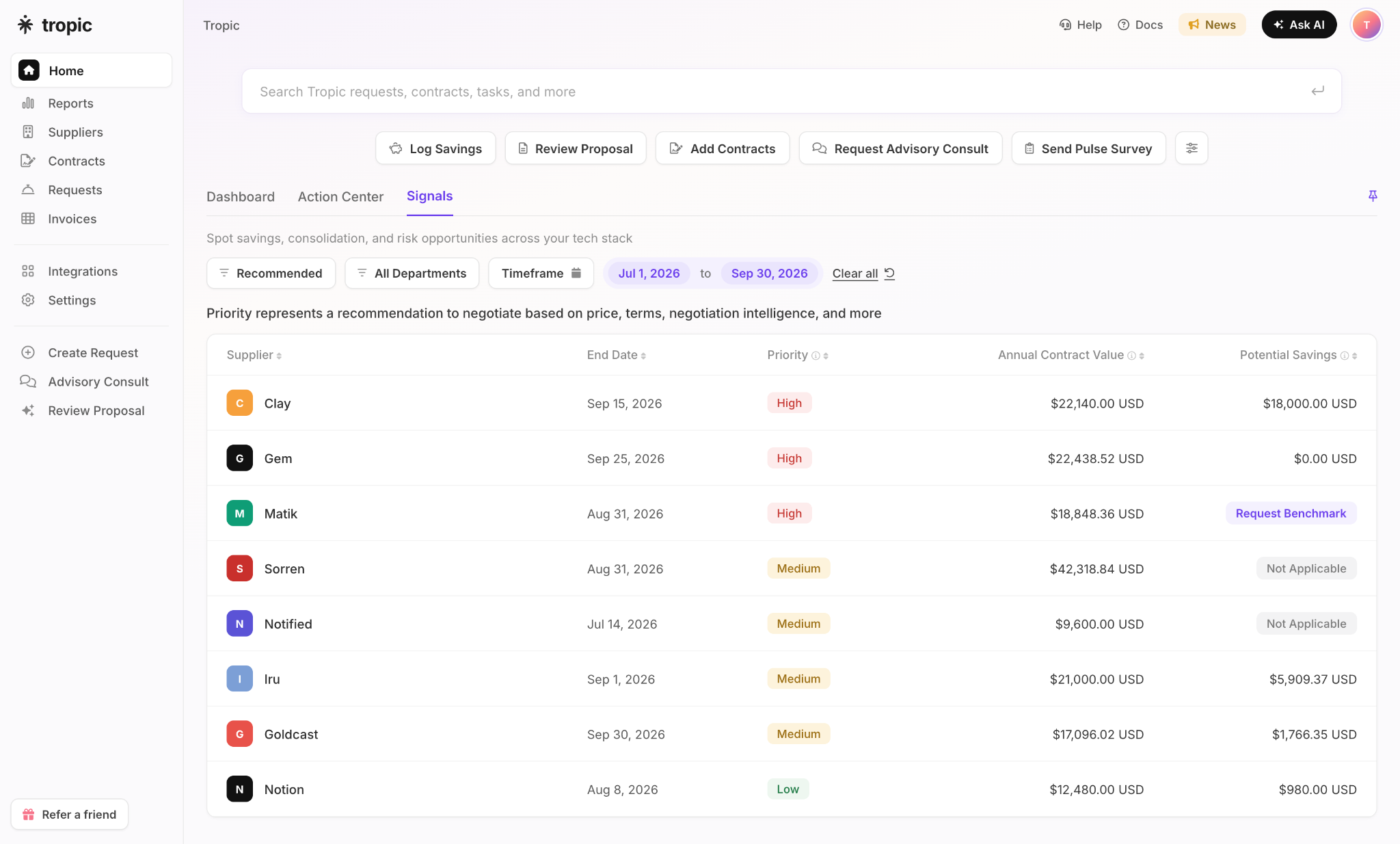
Signals: Where should we focus next?
Tropic Signals looks across the portfolio to surface savings, consolidation, compliance, sentiment, and payment-term opportunities by contract end date. Procurement teams can filter those views by department and timeframe, making it easier to prepare for company-wide planning sessions or focused conversations with individual business owners.
Together, these views help teams move from searching for information to deciding what to do with it.
Plan First – Then Execute With Better Information
Procurement teams already know how to run a sourcing process or negotiate a renewal. What they have been missing is an easier way to decide where their time will create the most value.
- AI Consumption Management shows where variable spend is headed
- Redundancy Analysis reveals where contracted products overlap
- Dashboard, Action Center, and Signals bring those insights together with the rest of the portfolio so teams can decide what to address now and what to plan for next
That means fewer surprises at renewal, fewer hours spent building planning spreadsheets, and better information before budget and technology decisions are locked.
See How It All Works Together
Planning and execution should not live in separate systems or depend on another spreadsheet.
Get a demo and see how Tropic brings portfolio-wide intelligence, AI consumption, SKU-level redundancy, renewal planning, and negotiation support together to help modern software buyers decide where to focus and take action with better information.

.jpg)
Related blogs
Drive savings and efficiency at any stage
Discover why hundreds of companies choose Tropic to gain visibility and control of their spend.